

World Suicide Prevention Day (WSPD) is an awareness day observed on 10 September every year, in order to provide worldwide commitment and action to prevent suicides, with various activities around the world since 2003. The International Association for Suicide Prevention (IASP) collaborates with the World Health Organisation (WHO) and the World Federation for Mental Health (WFMH) to host World Suicide Prevention Day. In 2011 an estimated 40 countries held awareness events to mark the occasion. According to WHO’s Mental health Atlas released in 2014, no low-income country reported having a national suicide prevention strategy, while less than 10% of lower-middle income countries, and almost a third of upper-middle and high-income countries had.

Contd…
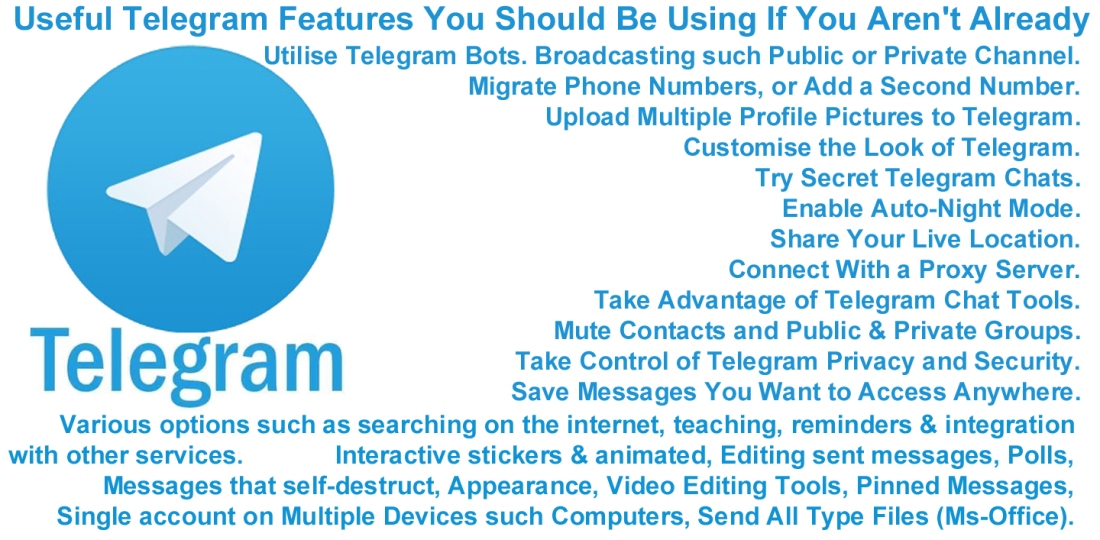
Telegram provides unlimited server storage. This means all your text messages, images media files & documents will be saved on their cloud without losing any data, you don’t need to worry about backup & restore. Telegram Private Groups cannot be found with an in-app search. The group is private, after all that you can use the 2,00,000 member limit fully. Telegram Channels are a tool for broadcasting public (or) private messages to large audiences, similarly as you do on Twitter or Facebook Page. In fact, channels can have an unlimited number of subscribers. Telegram Private Channels cannot be found with an in-app search. Group video calls on Telegram allow 30 users to broadcast from their camera as well as their screens. This can now be watched by 1,000 people at once (updated by 1st August 2021). Users can hold anything event online, from lectures to concerts and everything in between, similarly as Zoom or Microsoft Teams or Google Meet.
Join Us
| Telegram Channel | Twitter | LinkedIn Page | Microsoft Teams | Other Social | WhatsApp Channel | Blogger |
On its first event in 2003, the 1999 World Health Organisation’s global suicide prevention initiative is mentioned with regards to the main strategy for its implementation, requiring:
- “The organisation of global, regional and national multi-sectoral activities to increase awareness about suicidal behaviours and how to effectively prevent them.”
- “The strengthening of countries’s capabilities to develop and evaluate national policies and plans for suicide prevention.”
As of recent WHO releases, challenges represented by social stigma, the taboo to openly discuss suicide, and low availability of data are still to date obstacles leading to poor data quality for both suicide and suicide attempts: “given the sensitivity of suicide – and the illegality of suicidal behaviour in some countries – it is likely that under-reporting and misclassification are greater problems for suicide than for most other causes of death.”

Suicide has a number of complex and interrelated and underlying contributing factors … that can contribute to the feelings of pain and hopelessness. Having access to means to kill oneself – most typically firearms, medicines and poisons – is also a risk factor.
Contd…
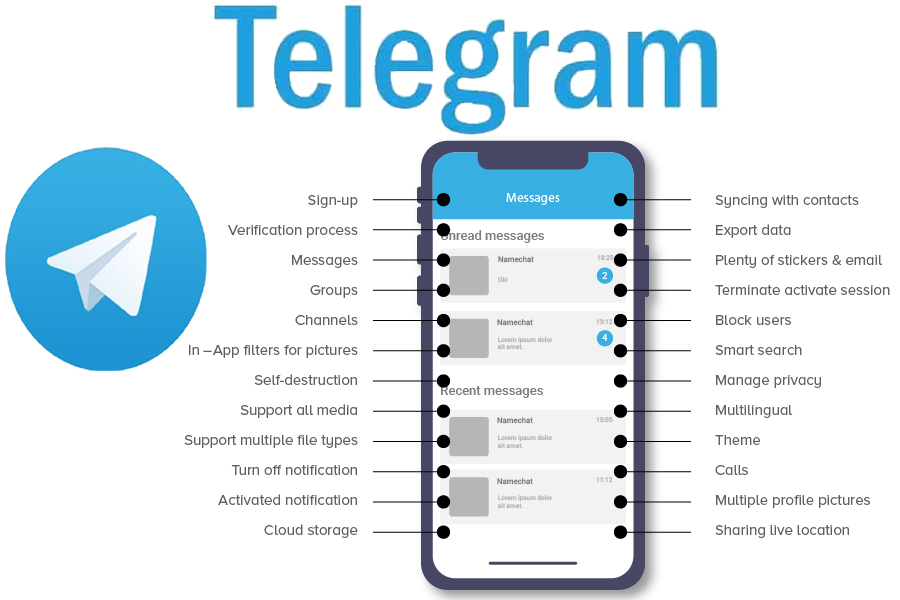
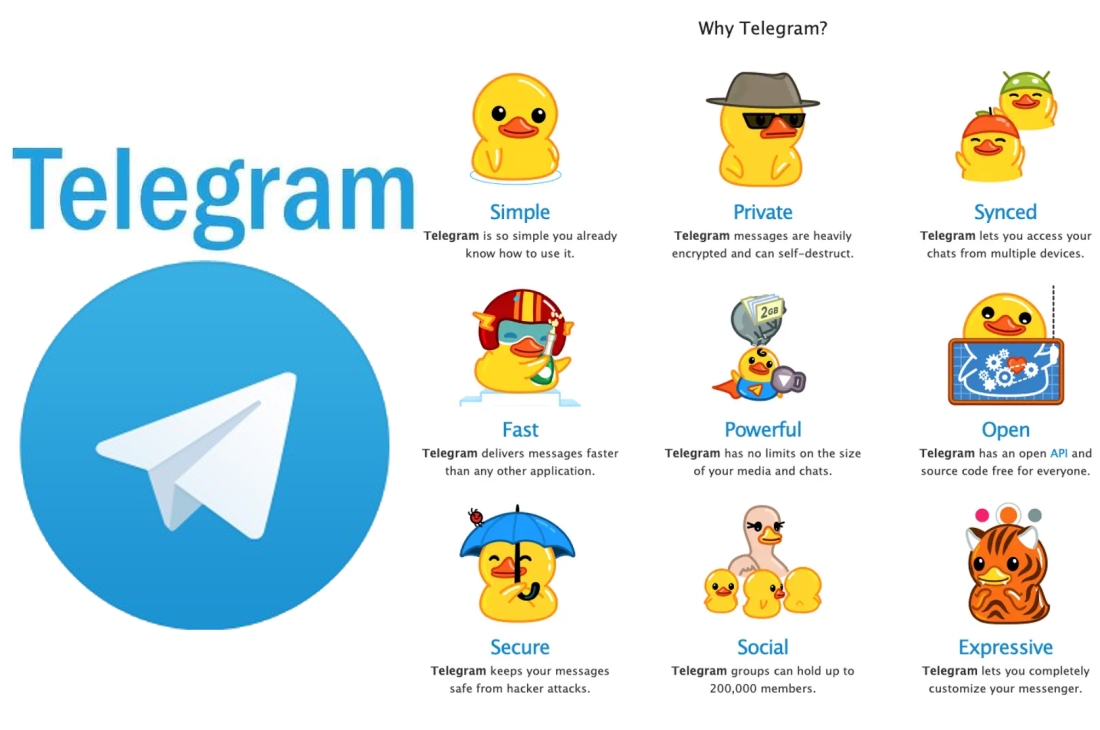
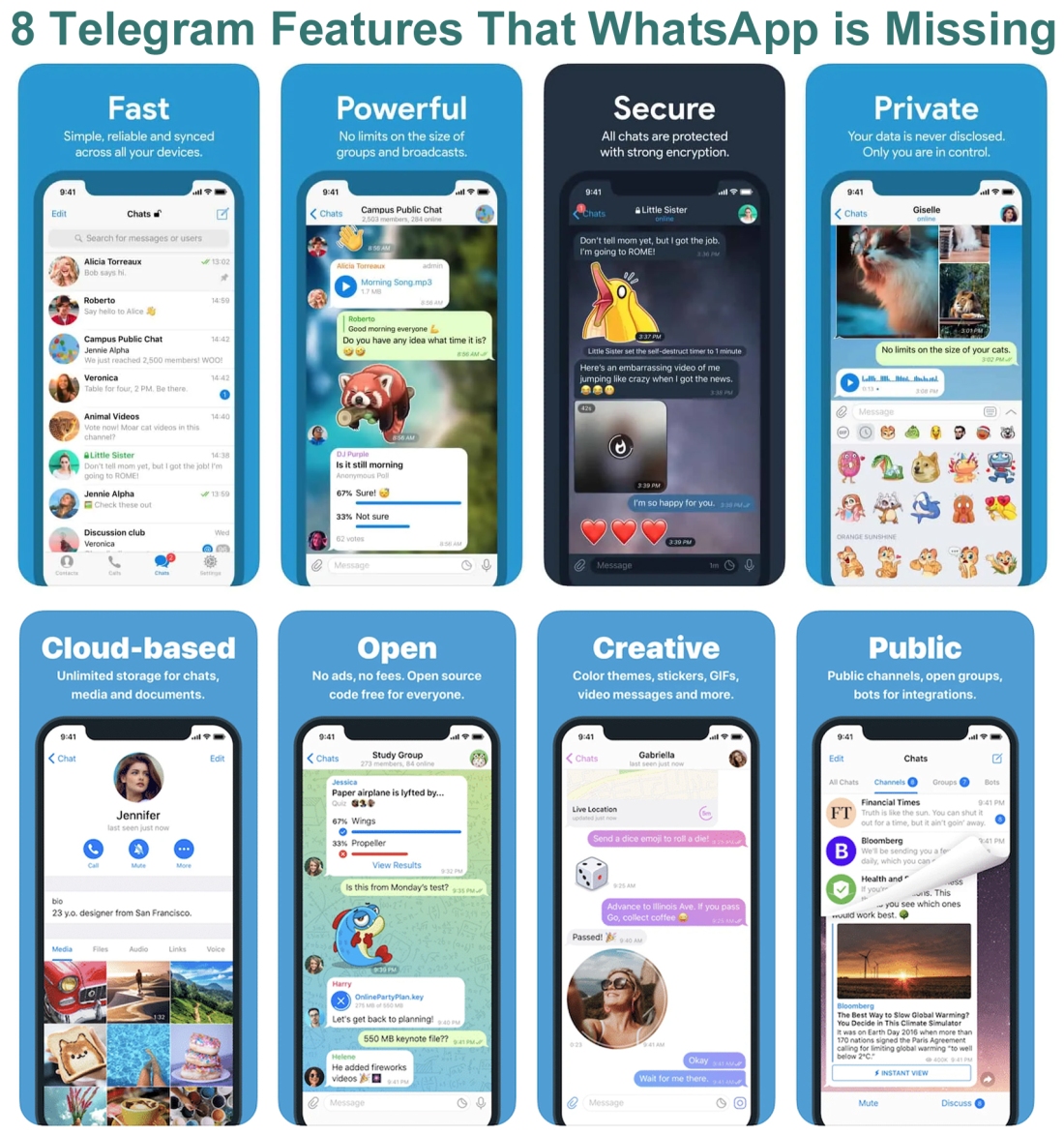
A. Simple: Telegram is so simple you already know how to use it.
B. Private: Telegram messages are heavily encrypted and can self-destruct.
C. Synced: Telegram lets you access your chats from multiple devices.
D. Fast: Telegram delivers messages faster than any other application such WhatsApp, Signal etc.
E. Powerful: Telegram has no limits on the size of your media and chats.
F. Open: Telegram has an open API and source code free for everyone.
G. Secure: Telegram keeps your messages safe from hacker attacks.
H. Expressive: Telegram lets you completely customise your messenger.
Join Us
| Telegram Channel | Twitter | LinkedIn Page | Microsoft Teams | Other Social | WhatsApp Channel | Blogger |

Suicide rates per 100,000 males (left) and females (right).

On average, three male suicides are reported for every female one, consistently across different age groups and in almost every country in the world. “Conversely, rates of suicide attempts tend to be 2-3 times higher in women than in men, although the gender gap has narrowed in recent years.” More people die from suicide than from murder and war; it is the 13th leading cause of death worldwide. According to WHO there are twenty people who have a suicide attempt for every one that is fatal, at a rate approximately one every three seconds. Suicide is the “most common cause of death for people aged 15 – 24.”According to WHO, suicide accounts for nearly half of all violent deaths in the world. Brian Mishara, IASP president, noted that, “more people kill themselves than die in all wars, terrorist acts and interpersonal violence combined.” As of 2008, the WHO refers the widest number of suicides occur in the age group 15 – 29, while the lowest in the 80+ although representing as well the one with the highest rate (per 100,000) of all age groups, with 27.8 suicides and 60.1 for females and males respectively. In 2015 the reported global age-standardised rate is 10.7 per 100,000.

Social norms play a significant role in the development of suicidal behaviors. Late 19th century’s sociological studies recorded first ever observations on suicide: with statistics of the time at hand, sociologists mentioned the effects of industrialisation as in relations between new urbanised communities and vulnerability to self-destructive behavior, suggesting social pressures have effects on suicide. Today, differences in suicidal behavior among different countries can show significant.
- 2018 – “Working Together to Prevent Suicide”
- 2017 – “Take a Minute, Change a Life”
- 2016 – “Connect, Communicate, Care”
- 2015 – “Preventing Suicide: Reaching Out and Saving Lives”
- 2014 – “Light a candle near a Window”
- 2013 – “Stigma: A Major Barrier to Suicide Prevention”
- 2012 – “Suicide Prevention across the Globe: Strengthening Protective Factors and Instilling Hope”
- 2011 – “Preventing Suicide in Multicultural Societies”
- 2010 – “Families, Community Systems and Suicide”
- 2009 – “Suicide Prevention in Different Cultures”
- 2008 – “Think Globally, Plan Nationally, Act Locally”
- 2007 – “Suicide prevention across the Life Span”
- 2006 – “With Understanding New Hope”
- 2005 – “Prevention of Suicide is Everybody’s Business”
- 2004 – “Saving Lives, Restoring Hope”
- 2003 – “Suicide Can Be Prevented!”
Suicide prevention’s priorities, as declared on the 2012 World Suicide Prevention Day event, are stated below:
- We need to continue to research suicide and non-fatal suicidal behaviour, addressing both risk and protective factors.
- We need to develop and implement awareness campaigns, with the aim of increasing awareness of suicidal behaviours in the community, incorporating evidence on both risk and protective factors.
- We need to target our efforts not only to reduce risk factors but also to strengthen protective factor, especially in childhood and adolescence.
- We need to train health care professionals to better understand evidence-based risk and protective factors associated with suicidal behaviour.
- We need to combine primary, secondary and tertiary prevention.
- We need to increase use of and adherence to treatments shown to be effective in treating diverse conditions; and to prioritise research into effectiveness of treatments aimed at reducing self-harm and suicide risk.
- We need to increase the availability of mental health resources and to reduce barriers to accessing care.
- We need to disseminate research evidence about suicide prevention to policy makers at international, national and local levels.
- We need to reduce stigma and promote mental health literacy among the general population and health care professionals.
- We need to reach people who don’t seek help, and hence don’t receive treatment when they are in need of it.
- We need to ensure sustained funding for suicide research and prevention.
- We need to influence governments to develop suicide prevention strategies for all countries and to support the implementation of those strategies that have been demonstrated to save lives.

Factors
Follows a brief summary of key quotes on the subject of suicide from different sources:
“The main suicide triggers are poverty, unemployment, the loss of a loved one, arguments and legal or work-related problems [..] Suicide results from many complex socio-cultural factors and is more likely to occur during periods of socioeconomic, family and individual crisis (e.g. loss of a loved one, unemployment, sexual orientation, difficulties with developing one’s identity, disassociation from one’s community or other social/belief group, and honour). [..] In richer countries, three times as many men die of suicide than women do, but in low- and middle-income countries the male-to-female ratio is much lower at 1.5 men to each woman. [..] In the United States, males are four times more likely to die from suicide than are females. However, females are more likely to attempt suicide than are males. [..] The disparity in suicide rates has been partly explained by the use of more lethal means and the experience of more aggression and higher intent to die [..] in men than women.”

“In much of the world, suicide is stigmatised and condemned for religious or cultural reasons. In some countries, suicidal behavior is a criminal offence punishable by law. Suicide is therefore often a secretive act surrounded by taboo, and may be unrecognised, misclassified or deliberately hidden in official records of death. Stigma, particularly surrounding mental disorders and suicide, means many people thinking of taking their own life or who have attempted suicide are not seeking help and are therefore not getting the help they need. The prevention of suicide has not been adequately addressed due to a lack of awareness of suicide as a major public health problem and the taboo in many societies to openly discuss it. Raising community awareness and breaking down the taboo is important for countries to make progress in preventing suicide.”

Physical and especially mental health disabling issues such as depression, are among the most common of the long list of complex and interrelated factors, ranging from financial problems to the experience of abuse, aggression, exploitation and mistreatment, that can contribute to the feelings of pain and hopelessness underling suicide. Usually substances and alcohol abuse also play a role. Prevention strategies generally emphasise public awareness towards social stigma and suicidal behaviours.
Country-based information

| Country | Crude rate |
Age-adjusted rate[note 1] |
Male:Female ratio |
|---|---|---|---|
| Sri Lanka | 35.3 | 34.6 | 4.4 : 1 |
| Lithuania | 32.7 | 26.1 | 5.8 : 1 |
| Korea, Republic of | 32.0 | 24.1 | 2.7 : 1 |
| Guyana | 29.0 | 30.6 | 3.0 : 1 |
| Mongolia | 28.3 | 28.1 | 5.2 : 1 |
| Kazakhstan | 27.5 | 27.5 | 5.0 : 1 |
| Suriname | 26.6 | 26.9 | 3.3 : 1 |
| Belarus | 22.8 | 19.1 | 6.5 : 1 |
| Poland | 22.3 | 18.5 | 6.7 : 1 |
| Latvia | 21.7 | 17.4 | 6.6 : 1 |
| Hungary | 21.6 | 15.7 | 3.7 : 1 |
| Slovenia | 21.4 | 15.0 | 4.1 : 1 |
| Angola | 20.5 | 25.9 | 2.7 : 1 |
| Belgium | 20.5 | 16.1 | 2.6 : 1 |
| Russia | 20.1 | 17.9 | 5.7 : 1 |
| Ukraine | 20.1 | 16.6 | 4.6 : 1 |
| World | 10.7 | 10.7 | 1.7 : 1 |
In 1999, death by self-inflicted injuries was the fourth leading cause of death among aged 15–44, in the world. In a 2002 study it’s reported the countries with the lowest rates tend to be in Latin America, ‘Muslim countries and a few Asian countries’, and noted a lack of information from most African countries (see map). Data quality is to date a concern for suicide prevention policies. Incidence of suicide tends to be under-reported and misclassified due to both cultural and social pressures, and possibly completely unreported in some areas. Since data might be skewed, comparing suicide rates between nations can result in statistically unsound conclusions about suicidal behaviour in different countries. Nevertheless the statistics are commonly used to directly influence decisions about public policy and public health strategies.

Of the 34 member countries of the OECD, a group of mostly high-income countries that uses market economy to improve the Human Development Index, South Korea had the highest suicide rate in 2009. In 2011 South Korea’s Ministry of Health and Welfare enacted legislation coinciding with WSPD to address the high rate.

In 2008 it was reported that young people 15–34 years old in China were more likely to die by suicide than by any other mean, especially young Chinese women in rural places because of ‘arguments about marriage’. By 2011 however, suicide rate for the same age group had been declining significantly according to official releases, mainly by late China’s urbanisation and migration from rural areas to more urbanised: since the 1990s indeed, overall national Chinese suicide rate dropped by 68%.

According to WHO, in 2009 the four countries with the highest rates of suicide were all in Eastern Europe; Slovenia had the fourth highest rate preceded by Russia, Latvia, and Belarus. This stays within findings from the start of the WSPD event in 2003 when the highest rates were also found in Eastern European countries. As of 2015 the highest suicide rates are still in Eastern Europe, Korea and the Siberian area bordering China, in Sri Lanka and the Guianas, Belgium and few Sub-Saharan countries.
According to WHO’s Mental health Atlas released in 2014, no low-income country reported having a national suicide prevention strategy, while less than 10% of lower-middle income countries, and almost a third of upper-middle and high-income countries had. Focus of the WSPD is the fundamental problem of suicide, considered a major public health issue in high-income and an emerging problem in low and middle-income countries. Among high-income countries (besides South Korea) highest rates in 2015 are found across some Eastern European countries, Belgium and France, Japan, Croatia and Austria, Uruguay and Finland.

Socioeconomic status plays an important role in suicidal behavior, and wealth is a constant with regards to Male–Female suicide rate ratios, being that excess male mortality by suicide is generally limited or non existent in low- and middle-income societies, whereas it is never absent in high-income countries (see table).
Suicidal behavior is also subject of study for economists since about the 1970s: although national costs of suicide and suicide attempts (up to 20 for every one completed suicide) are very high, suicide prevention is hampered by scarce resources for lack of interest by mental health advocates and legislators; and moreover, personal interests even financial are studied with regards to suicide attempts for example, in which insights are given that often “individuals contemplating suicide do not just choose between life and death [..] the resulting formula contains a somewhat paradoxical conclusion: attempting suicide can be a rational choice, but only if there is a high likelihood it will cause the attempter’s life to significantly improve.” In the United States alone, yearly costs of suicide and suicide attempts are comprised in 50-100 billion dollars.

The United Nations issued ‘National Policy for Suicide Prevention’ in the 1990s which some countries also use as a basis for their assisted suicide policies nevertheless the UN noted that suicide bombers’ deaths are seen as secondary to their goal of killing other people or specific targets and the bombers are not otherwise typical of people committing suicide.
According to a 2006 WHO press release, one third of worldwide suicides were committed with pesticides, “some of which were forbidden by United Nations (UN) conventions.” WHO urged the highly populated Asian countries to restrict pesticides that are commonly used in failed attempts, especially organophosphate-based pesticides that are banned by international conventions but still made in and exported by some Asian countries. WHO reports an increase in pesticide suicides in other Asian countries as well as Central and South America. It is estimated that such painful failed attempts could be reduced by legalising controlled voluntary euthanasia options, as implemented in Switzerland.
As of 2017, it is estimated that around 30% of global suicides are still due to pesticide self-poisoning, most of which occur in rural agricultural areas in low- and middle-income countries (consisting in about 80% world population). In high-income countries consisting of the remaining 20% world population most common methods are firearms, hanging and other self-poisoning.
Gender and suicide

Male:Female ratios of suicide rates. Green means higher prevalence of male suicides. Below are the male and female standardised suicide rates used to derive the ratios.
European and American societies report a higher male mortality by suicide than any other, while various Asian a much lower. According to most recent data provided by WHO, about 40,000 females of the global three hundred thousand female suicides and 150,000 males of the global half million male suicides, deliberately take their own life every year in Europe and the Americas (consisting of about thirty percent world population). As of 2015, apart from a few South and East Asian countries home to twenty percent of world population, Morocco, Lesotho, and two Caribbean countries, because of changing gender roles suicide rates are globally higher among men than women.
Even though women are more prone to suicidal thoughts than men, rates of suicide are higher among men. On average, there are about three male suicides for every female one – though in parts of Asia, the ratio is much narrower. (WHO, 2002)

The disparity in suicide rates has been partly explained by the use of more lethal means and the experience of more aggression and higher intent to die, when suicidal, in men than women. (IASP, 2012)
There are many potential reasons for different suicide rates in men and women: gender equality issues, differences in socially acceptable methods of dealing with stress and conflict for men and women, availability of and preference for different means of suicide, availability and patterns of alcohol consumption, and differences in care-seeking rates for mental disorders between men and women. The very wide range in the sex ratios for suicide suggests that the relative importance of these different reasons varies greatly by country and region. (WHO, 2012).

In western countries men are about 300% or thrice as likely to die by suicide than females, while a few countries (counting over a hundred million residents overall) exceed the 600% figure. Most considerable difference in male–female suicide ratios is noted in countries of the former Soviet Bloc and in some of Latin America.
Globally, in 2015 women had higher suicide rates in eight countries. Due to permanence of traditional gender roles, in China (almost a fifth of world population) women were up to 30% more likely than men to commit suicide and up to 60% in some other South Asian countries: overall South Asian (including South-Eastern Asia, a third of world population) age-adjusted ratio however, was around global average of 1.7 : 1 (men being around 70% more likely than women to die by suicide).

Some suicide reduction strategies do not recognise the separate needs of males and females. Researchers have recommended aggressive long-term treatments and follow up for males that show indications of suicidal thoughts. Studies have also found that because young females are at a higher risk of attempting suicide, policies tailored towards this demographic are most effective at reducing overall rates.
Shifting cultural attitudes about gender roles and social norms, and especially ideas about masculinity, may also contribute to closing the gender gap: social status and working roles are assumed to be crucial for men’s identity.

Year Observances
September Observances
Join us on Telegram Channel: @worldcelebrationdays (It is not a group)
Web Telegram in Browser : https://web.telegram.org/k/#@worldcelebrationdays
https://web.telegram.org/k/#@worldcelebrationdays
Twitter:
Hashtags:
#WorldSuicidePreventionDay #SuicidePreventionDay #SuicidePrevention #Suicide #prevention #event #September #WorldDay #InternationalDay #NationalDay #CelebrationDay #HappyDay #Celebration #Observances #Programme #information #TelegramTips #whatsappdown #DeleteWhatsApp #Sept #telegramchannel #World #International #Nation .
Join us on Twitter Follow: @worldinformativ

https://twitter.com/worldinformativ
LinkedIn:
Hashtags:
#worldsuicidepreventionday #suicidepreventionday #suicideprevention #suicide #prevention #event #september #worldday #internationalday #nationalday #celebrationday #happyday #programmes #informations #observances #telegramtips #twitter #linkedinnewsletter #telegramchannel #whatsappdown #deletewhatsapp #sept . #world #internationalisation #celebrationdays #celebrations #events .
Click here: https://lnkd.in/gg2aHQNW
Join us on LinkedIn Follow:

https://www.linkedin.com/company/informativeandentertaining/
Microsoft Teams:

Microsoft Teams Channel : https://teams.live.com/l/community/FEA-Z68SQNIePDj_gY
Telegram:
Hashtags:
#WorldSuicidePreventionDay #SuicidePreventionDay #SuicidePrevention #Suicide #Prevention #Event #September #WorldDay #InternationalDay #NationalDay #CelebrationDay #HappyDay #Programme #Information #Observances #TelegramTips @Telegram #TelegramChannel #Twitter #LinkedinNewsletter #WhatsAppDown #DeleteWhatsApp #Sept . #World #International #Nation #CelebrationDays #Celebration #Happy #Events .
Join us on Telegram Channel: @worldcelebrationdays
Web Telegram in Browser : https://web.telegram.org/k/#@worldcelebrationdays
https://t.me/worldcelebrationdays
Facebook:
Hashtags:
#WorldSuicidePreventionDay #suicidepreventionday #suicideprevention #suicide #prevention #event #september #WorldDay #InternationalDay #NationalDay #CelebrationDay #HappyDay #Observances #Programme #information #TelegramTips #TelegramChannel #LinkedinNewsletter #Celebration #Sept . #National #world #international #CelebrationDays #celebrations #happy #Events .
Better Way: Delete your WhatsApp and Change to Telegram
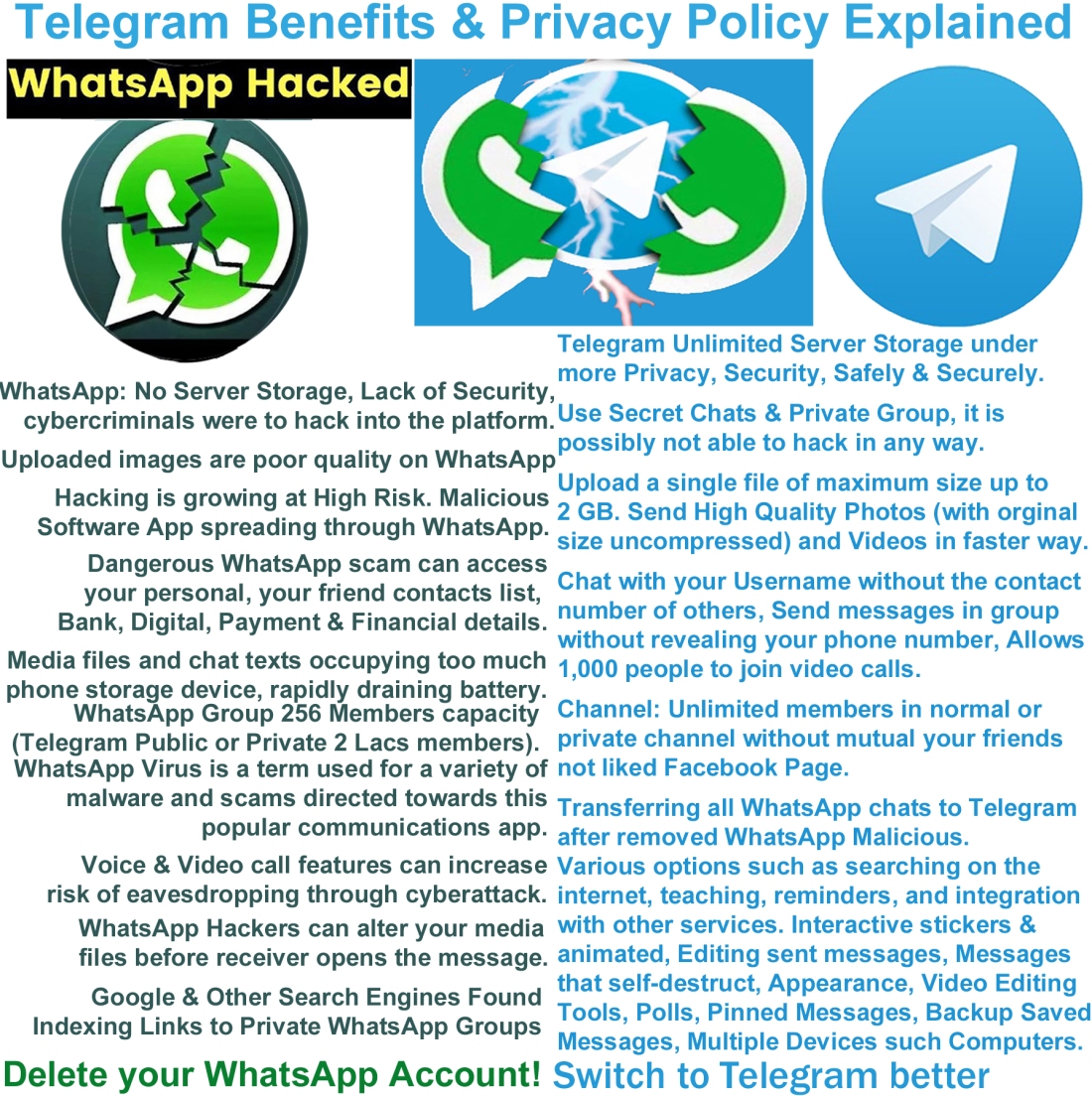
WhatsApp : Illegal Effect : Hacking is growing at High Risk in future
(1) WhatsApp does not store messages on its servers, so if cybercriminals were to hack into the platform, they would not be able to decrypt any of the messages.
Telegram is a cloud service. We store messages, photos, videos and documents from your cloud chats on our servers so that you can access your data from any of your devices anytime without having to rely on third-party backups. This way local engineers or physical intruders cannot get access to user data.
(2) (a) Additionally, WhatsApp does not have the key to see encrypted messages. By default, WhatsApp stores messages in a way that allows them to be backed up to the cloud by iOS or Android. WhatsApp store in phone storage device occupies more space.
(2) (b) WhatsApp files (photos, audios, videos, documents) and texts occupying too much phone storage device. Read more…Click here to open link.
https://www.businesstoday.in/technology/news/story/whatsapp-files-occupying-too-much-phone-storage-heres-what-you-can-do-279321-2020-11-21 to view webpage with the browser.
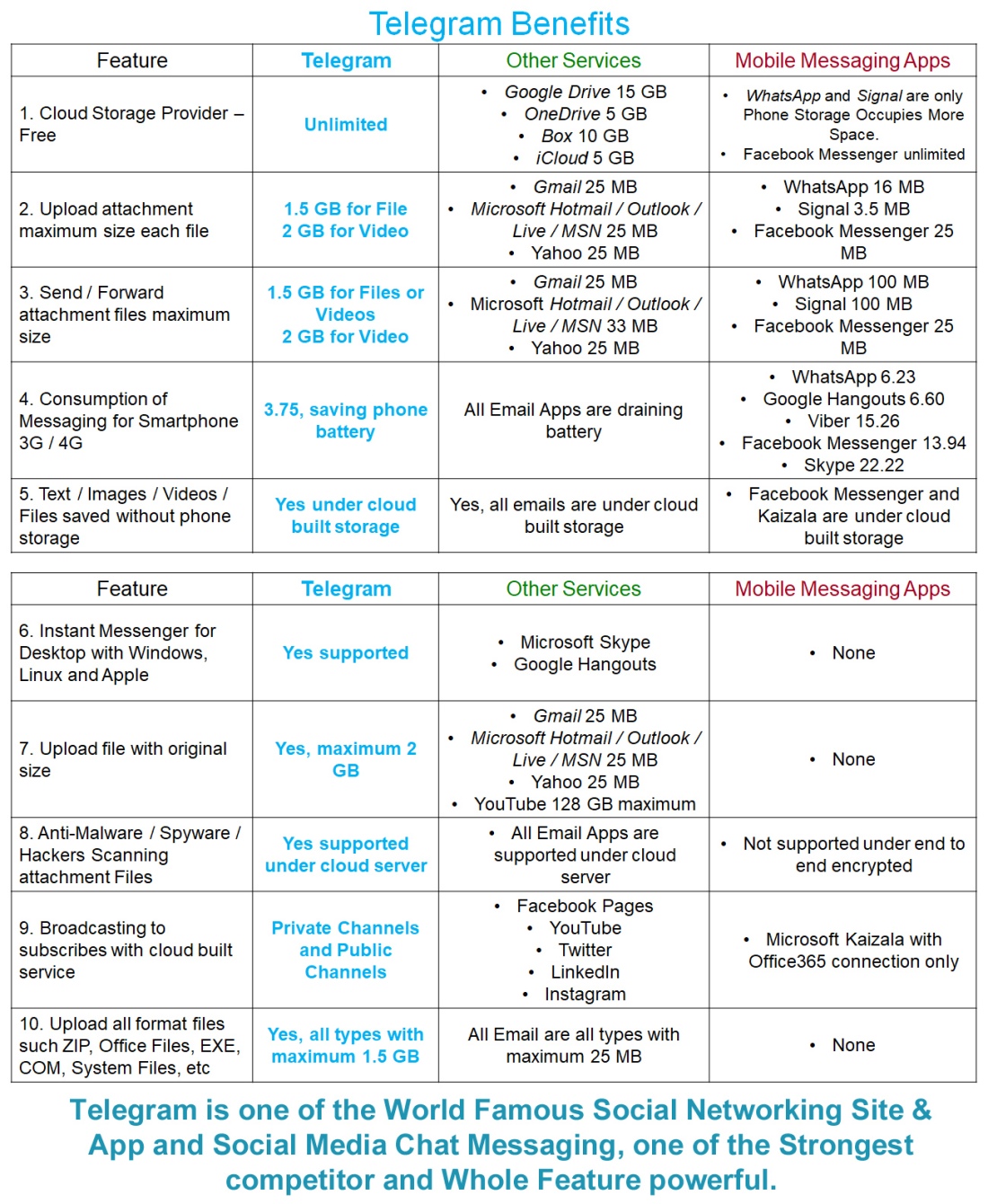
Telegram provides unlimited cloud storage. This means all your text messages, images media files & documents will be saved on their cloud without losing any data, you don’t need to worry about backup & restore.
(3) WhatsApp: Uncrackable problem of end-to-end encryption: Lack of Security
Telegram Secret Chats are one-on-one chats wherein messages are encrypted with a key held only by the chat’s participants. Note that the schema for these end-to-end encrypted Secret Chats is different from what is used for cloud chats.
(4) WhatsApp Draining Your Phone’s Battery Too? This Could Be The Reason. Read more…Click here to open link.
https://www.republicworld.com/technology-news/apps/whatsapp-draining-your-phones-battery-too-this-could-be-the-reason.html to view webpage with the browser.
(5) WhatsApp warning: How a single phone call hacked phones worldwide. Read more…Click here to open link.
https://www.express.co.uk/life-style/science-technology/1276195/WhatsApp-hack-how-single-call-compromised-phones to view webpage with the browser.
(6) WhatsApp virus is a term used for a variety of malware and scams directed towards this popular communications app. Read more…Click here to open link.
https://www.2-spyware.com/remove-whatsapp-virus.html#qm-h2-1 to view webpage with the browser.
(7) New Warning for WhatsApp Users Over Account Suspension ‘Hack’. Read more…Click here to open link.
https://www.forbes.com/sites/zakdoffman/2021/04/10/shock-new-warning-for-millions-of-whatsapp-users-on-apple-iphone-and-google-android-phones/?sh=2b33ce0d7585 to view webpage with the browser.
Telegram Privacy Policy: Read more: https://telegram.org/privacy
(8) This dangerous WhatsApp scam can access your personal and financial details. Read more…Click here to open link.
https://www.gadgetsnow.com/tech-news/this-dangerous-whatsapp-scam-can-access-your-personal-and-financial-details/articleshow/88519735.cms to view webpage with the browser.
(9) Your WhatsApp, Facebook data isn’t safe! Malicious apps that steal data found on Play Store. Read more…Click here to open link.
https://www.businesstoday.in/buzztop/buzztop-technology/your-whatsapp-facebook-data-isnt-safe-malicious-apps-that-steal-data-found-on-play-store/story/307472.html to view webpage with the browser.
(10) Dangerous new spyware can steal your WhatsApp messages and take photos using your smartphone camera without your permission and admit it’s been around for FIVE YEARS already. Read more…Click here to open link.
https://www.thesun.co.uk/tech/5359250/what-is-skygofree-spyware-how-to-stay-safe-whatsapp/ to view webpage with the browser.
(11) One of the most-advanced Android malware discovered; can even ‘steal’ your WhatsApp messages. Read more…Click here to open link.
https://cio.economictimes.indiatimes.com/news/digital-security/one-of-the-most-advanced-android-malware-discovered-can-even-steal-your-whatsapp-messages/62548876 to view webpage with the browser.
(12) One billion users of the messaging service are now promised full encryption. Which can only mean the spooks will retaliate elsewhere. Read more…Click here to open link.
https://www.theguardian.com/commentisfree/2016/apr/10/whatsapp-encryption-billion-users-data-security to view webpage with the browser.
(13) Wormable Android malware is spreading through WhatsApp messages. Read more…Click here to open link.
https://www.itpro.co.uk/security/malware/359133/new-android-malware-discovered-that-spreads-through-whatsapp-messages to view webpage with the browser.
(14) Malicious WhatsApp mod infects Android devices with malware. Read more…Click here to open link.
https://www.bleepingcomputer.com/news/security/malicious-whatsapp-mod-infects-android-devices-with-malware/ to view webpage with the browser.
(15) WhatsApp joinable calls feature can increase risk of eavesdropping through cyberattack: Kaspersky. Read more…Click here to open link.
https://telecom.economictimes.indiatimes.com/news/whatsapp-joinable-calls-feature-can-increase-risk-of-eavesdropping-through-cyberattack-kaspersky/84640328 to view webpage with the browser.
(16) WhatsApp hijack scam continues to spread. Read more…Click here to open link.
https://www.bbc.com/news/technology-57357301.amp to view webpage with the browser.
(17) 8 Ways Your WhatsApp Messages Can Be Hacked. Read more…Click here to open link.
https://www.makeuseof.com/tag/how-whatsapp-messages-can-hacked/ to view webpage with the browser.

Telegram Messenger Web ( https://web.telegram.org/#/login ) always easy and faster than all emails (Gmail, Hotmail, Outlook, Microsoft Office 365, Yahoo mail, AOL, etc) and also Instant Messenger. Available on the Telegram Desktop for Microsoft Windows / Apple Mac / Linux. Telegram Messenger is better than WhatsApp, Signal, WhatsApp Business, Microsoft Kaizala, WeChat, Hike, Line, Viber, Hangouts, BBM & Facebook Messenger for saving battery and phone storage with your Smartphone. Telegram for iPhone / iPad available on the App Store for iOS devices. https://telegram.org
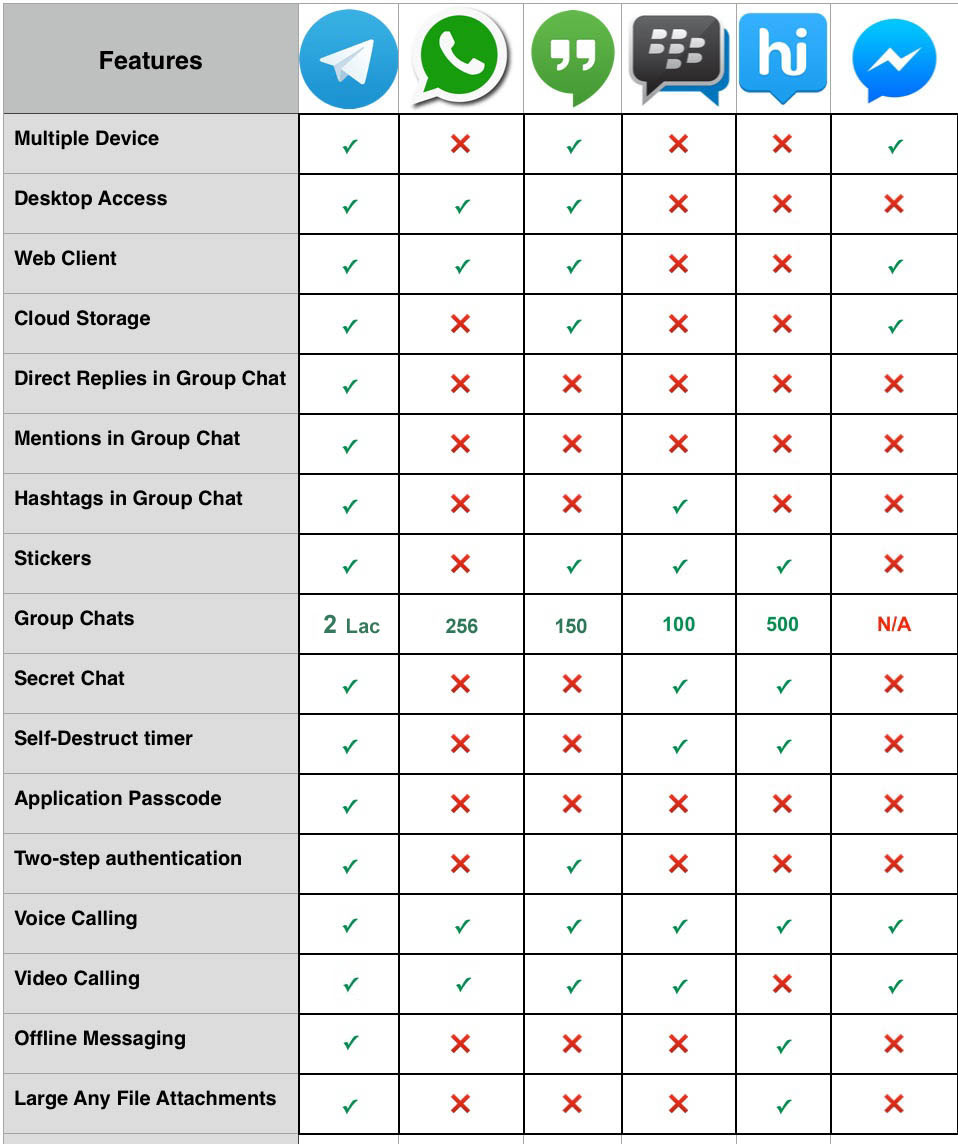
NOTE: Microsoft Kaizala has retired on 31st August 2023. Kaizala moved to Microsoft Teams from 1st September 2023.
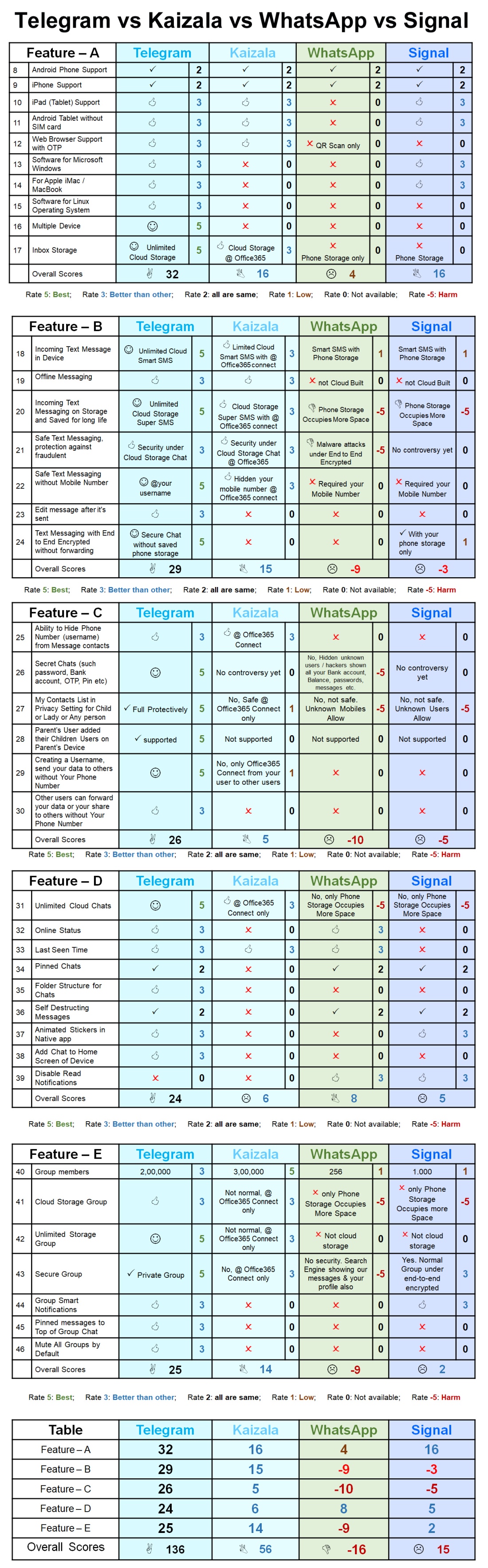
NOTE: Microsoft Kaizala has retired on 31st August 2023. Kaizala moved to Microsoft Teams from 1st September 2023.
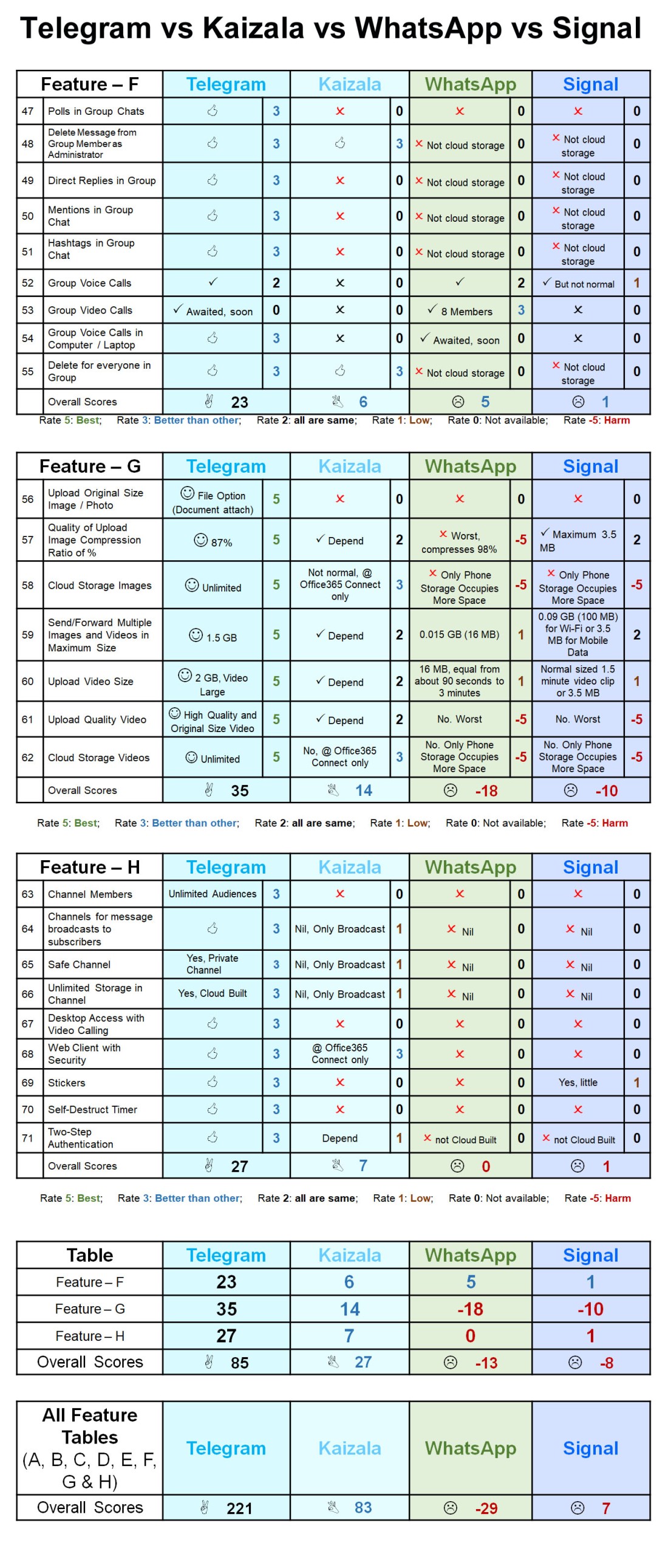
NOTE: Microsoft Kaizala has retired on 31st August 2023. Kaizala moved to Microsoft Teams from 1st September 2023.
Telegram provides unlimited cloud storage. This means all your text messages, images media files & documents will be saved on their cloud without losing any data, you don’t need to worry about backup & restore. Telegram Private Groups cannot be found with an in-app search. The group is private, after all that you can use the 2,00,000 member limit fully. Telegram Channels are a tool for broadcasting public (or) private messages to large audiences, similarly as you do on Twitter or Facebook Page. In fact, channels can have an unlimited number of subscribers. Telegram Private Channels cannot be found with an in-app search. Group video calls on Telegram allow 30 users to broadcast from their camera as well as their screens. This can now be watched by 1,000 people at once (updated by 1st August 2021). Users can hold anything event online, from lectures to concerts and everything in between, similarly as Zoom or Microsoft Teams or Google Meet.
A. Simple: Telegram is so simple you already know how to use it.
B. Private: Telegram messages are heavily encrypted and can self-destruct.
C. Synced: Telegram lets you access your chats from multiple devices.
D. Fast: Telegram delivers messages faster than any other application such WhatsApp, Signal etc.
E. Powerful: Telegram has no limits on the size of your media and chats.
F. Open: Telegram has an open API and source code free for everyone.
G. Secure: Telegram keeps your messages safe from hacker attacks.
H. Expressive: Telegram lets you completely customise your messenger.
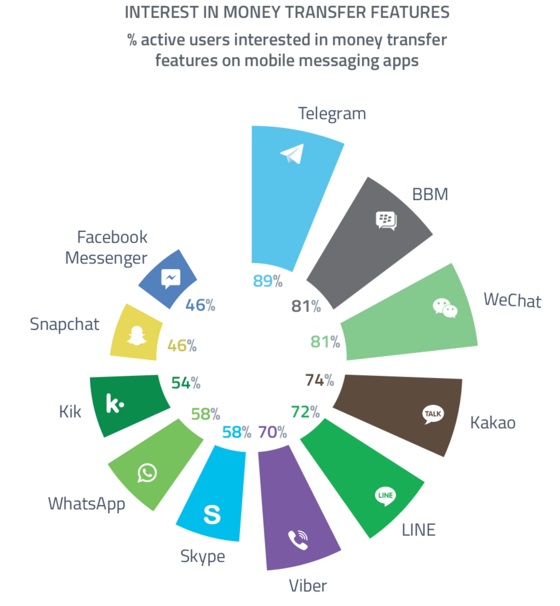
Telegram: Interest in Money Transfer Features % active users on BBM, WeChat, Kakao, LINE, Viber, Skype, WhatsApp, Kik, Snapchat and Facebook Messenger.
World Informative & Entertaining:

[ https://worldinformative.wordpress.com/ ]

Web Telegram in Browser : https://web.telegram.org/k/#@worldcelebrationdays
World Celebration Days
| Telegram Channel | Twitter | LinkedIn Page | Microsoft Teams | Other Social | WhatsApp Channel | Blogger |
All Guests Viewed since 2010: Counter:
 World Celebration Days